Plastic or wood? No, paper!
Share
Whether for meat, vegetables, bread, or fruit – cutting boards are indispensable in every kitchen. Depending on the material, there are various advantages and disadvantages to different cutting boards.
Wooden cutting boards are made from a sustainable, natural material. They can also be sanded and have proven antibacterial properties. However, they are not suitable for processing foods like onions, berries, or beets, as the odor and color will soak into the board. Furthermore, wooden cutting boards are not dishwasher safe. Many people consider using plastic cutting boards, but these are not heat-resistant, become unsightly after only a few uses, and release microplastics.
But how can these contradictions be reconciled with a paper cutting board?
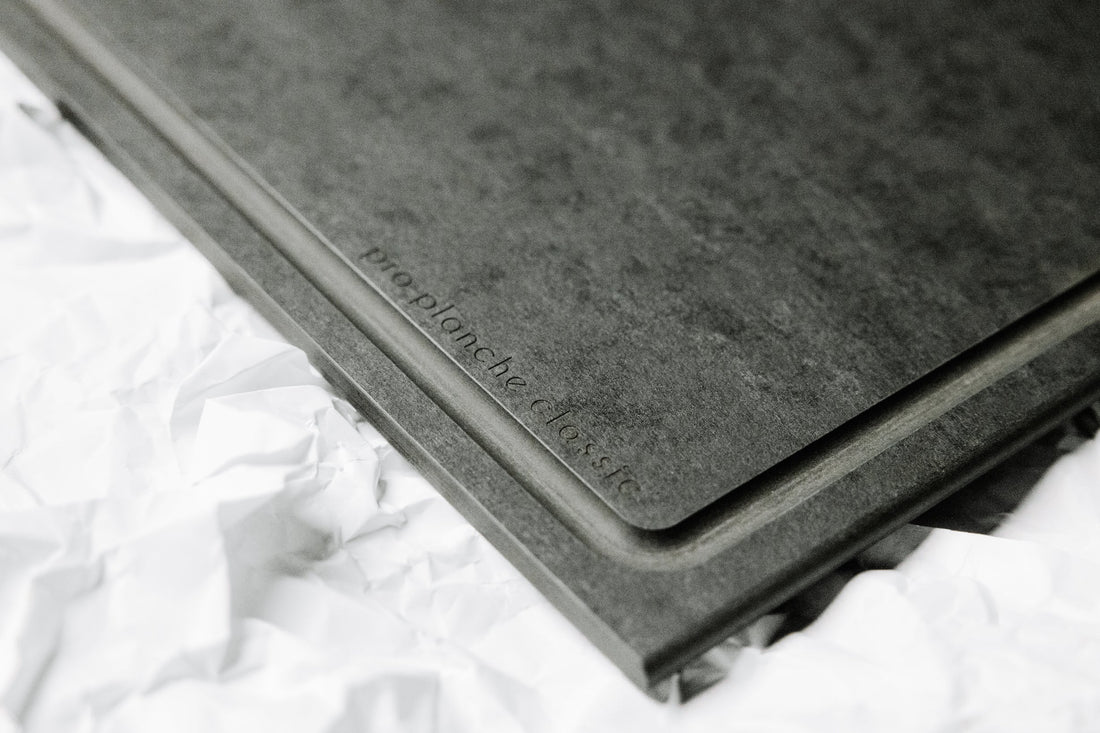
Our "pro planche" cutting boards are made from over 60 layers of paper. The individual paper layers are impregnated with a food-grade resin and then pressed under heat to create the finished product.
This combines the positive properties of wood and plastic!